Why California Solar Arrays Underproduce Most in Early Autumn
California solar arrays are typically at their dirtiest in September and October, because that is the end of a dry season that began in spring, and it is the point at which months of accumulated dust, agricultural particulate, and any wildfire ash have built up with no rain to rinse them off. The production loss is largest right at the moment owners stop paying attention, because output is also falling seasonally for entirely normal reasons and the two get confused.
Why does soiling peak in autumn in California?
California’s precipitation is concentrated in winter. By October an array has gone through most of a year of accumulation without a meaningful natural rinse. Soiling is cumulative and monotonic through the dry season, so its worst point is the end of it.
Nothing about this is exotic. Dust lands on glass every day. In a climate with summer rain, some of it washes off every few weeks. In most of California, nothing washes it off from late spring until the first real winter storm.
Why is the loss easy to miss?
Because output is genuinely falling in autumn anyway. Days are shorter, the sun angle is lower, and irradiance is down. An owner looking at raw kilowatt-hours sees a decline and attributes all of it to season. Separating soiling loss from seasonal irradiance decline requires comparing against expected production for the actual irradiance, not against last month.
Our answer page on how much production dirty solar panels lose covers the measurement in more depth, and our Soiling and Recovery Report shows what a documented before-and-after looks like.
What makes the California curve steeper than other states?
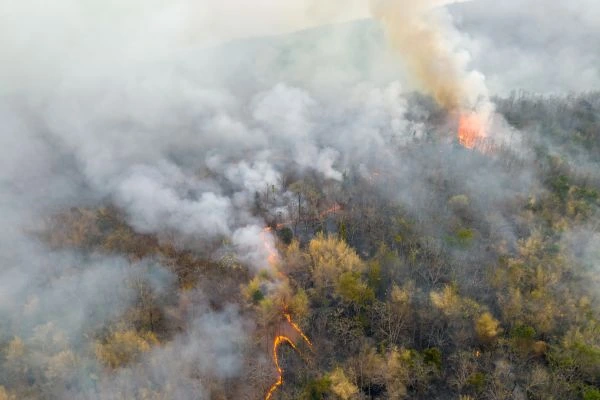
Three compounding factors. The dry season is unusually long. Agricultural particulate in the Central Valley is unusually heavy. And fire season lands at the end of the dry period, meaning ash deposits onto glass that is already loaded and has no rain coming to clear it.
Ash behaves differently from dust. It is fine and sticky, it bonds to the surface, and wind does not move it. An array that was already carrying a season of dust and then takes an ash-fall in September is in the worst condition it will be in all year.
Does the answer differ by region?
Yes, significantly. Central Valley agricultural sites in Kern County and Fresno County accumulate hardest and earliest. Inland Empire warehouse roofs accumulate oily combustion particulate that is less seasonal but more bonded. Coastal and Bay Area sites see the mildest curve. Desert and Antelope Valley sites see the most wind-event-driven variability. One statewide rule does not fit California, which is why our California page breaks the state into regions.
When should a California array be cleaned?
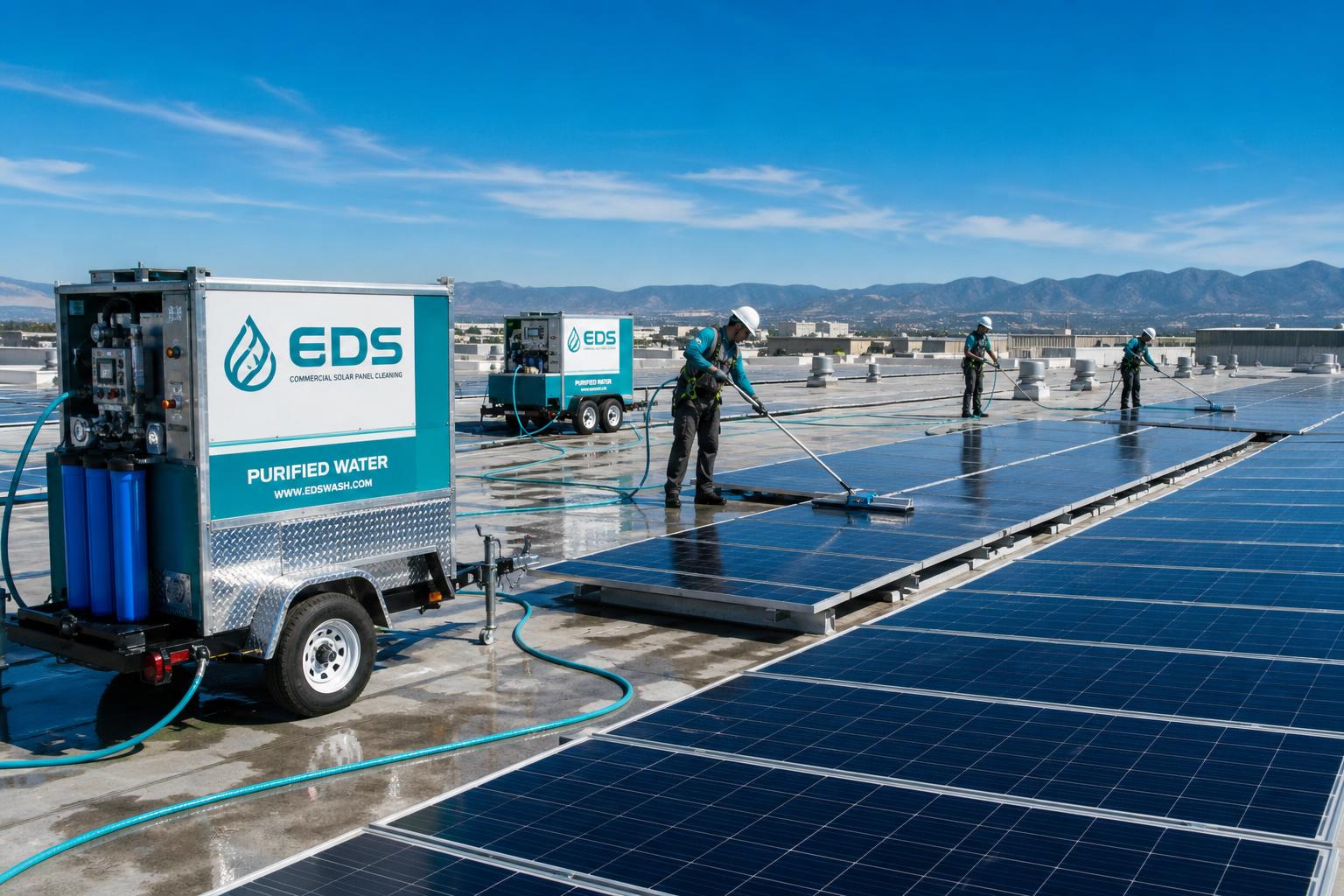
The highest-value single wash of the year for most California commercial arrays is at or just after the end of the dry season, before the winter production period, so the array enters the lower-irradiance months as clean as possible. The second-highest-value wash is event-driven, after ash-fall or a major wind event.
That is a different answer from “quarterly.” Quarterly is a reasonable baseline for high-soiling sites, but the timing of each wash matters as much as the count. Our answer page on how often commercial solar panels should be cleaned goes through the frequency question by environment.
How do you know whether it is soiling or something else?
Soiling is gradual, affects the whole array roughly evenly, and reverses completely after a wash. A sudden drop, or a loss concentrated in specific strings, is an equipment problem and not a cleaning problem. If a wash does not recover the production, the diagnosis was wrong.
That is also the honest test of whether cleaning is worth buying. If your monitoring shows a soiling ratio near 1.0 going into autumn, we will tell you a wash is not worth it yet. If it shows a widening gap, the end of the dry season is the time to close it. The commercial solar panel cleaning guide covers how to read that gap.