Wildfire Ash Remediation for California Solar Arrays: Emergency and Preventive Cleaning
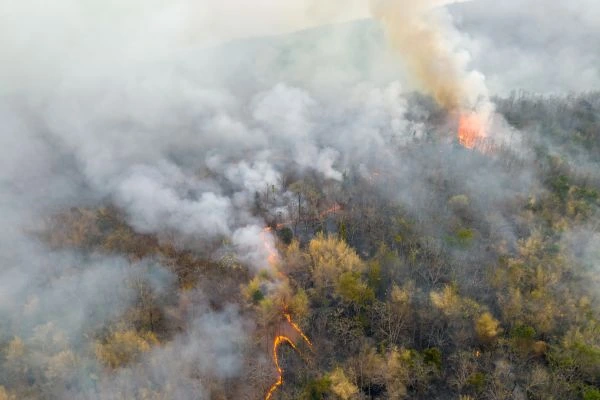
Wildfire ash on a California solar array should be washed off promptly rather than left for rain or the next scheduled visit, because ash is fine and sticky, bonds to glass once it goes through dew or light rain, and suppresses production until it is physically removed. Commercial and utility-scale installations across the state’s fire-exposed regions, from the Central Valley through the Inland Empire to San Diego County, take ash-fall most years. Every Detail Solar provides event-driven ash washing and pre-season cleaning for California arrays.
Why is wildfire ash more of a problem than regular soiling for California solar panels?
Dry dust is loose. Some of it blows off in wind and some of it rinses off in rain. Wildfire ash does neither reliably. The particles are fine, irregular and sticky, and they settle across a very large area well beyond the fire itself, so an array a hundred miles from the burn can still take a meaningful deposit.
The bigger difference shows up on the first damp morning. Dew, coastal fog or light rain on an ash-coated panel turns the ash into a slurry that dries as a film, concentrated along the lower edge of tilted modules where runoff collects. That film does not look dramatic from the ground and does not come off with a hose. It needs a wash with purified water and soft-bristle agitation.
The timing makes it worse. California fire season lands at the end of the dry season, so the ash falls on glass that is already carrying months of dust with no rain coming to clear it. Our article on why California arrays underproduce most in early autumn covers that cumulative curve.
What should California solar operators do after an ash-fall?
Document first. Photograph representative sections of the array and note where accumulation is heaviest, which usually tracks the wind direction during the event. Pull production against irradiance for the days after the smoke cleared; the gap is the soiling signal. For installations in the Central Valley, Inland Empire and Southern California fire zones, that record is also useful if any fire-related damage claim follows.
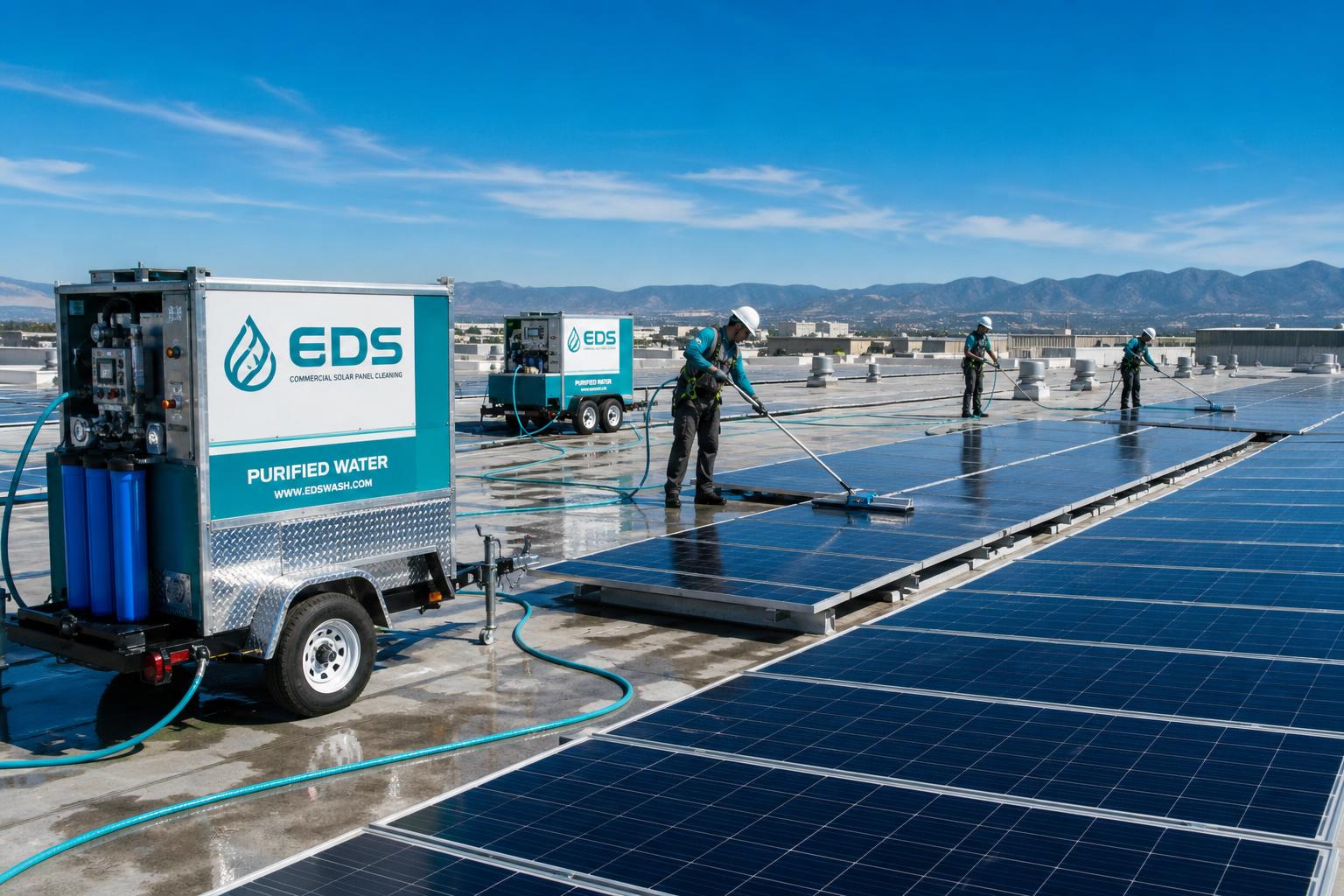
Then wash, with the right method. Purified water leaves nothing behind as the glass dries, and soft-bristle agitation lifts the bonded film without abrasives, pressure washing or chemicals that could damage the surface or put a manufacturer warranty at risk. Where ash is thick, crews work it off progressively rather than flooding it into a paste.
Schedule it as an event-driven wash, not as the next routine visit. The sooner ash comes off, the less of it has bonded and the more production comes back. Commercial rooftop portfolios across Los Angeles, Orange County and San Diego often need several buildings washed in the same window after a regional fire; portfolio scheduling is a normal part of how we work.
How do California regions differ in wildfire ash exposure?
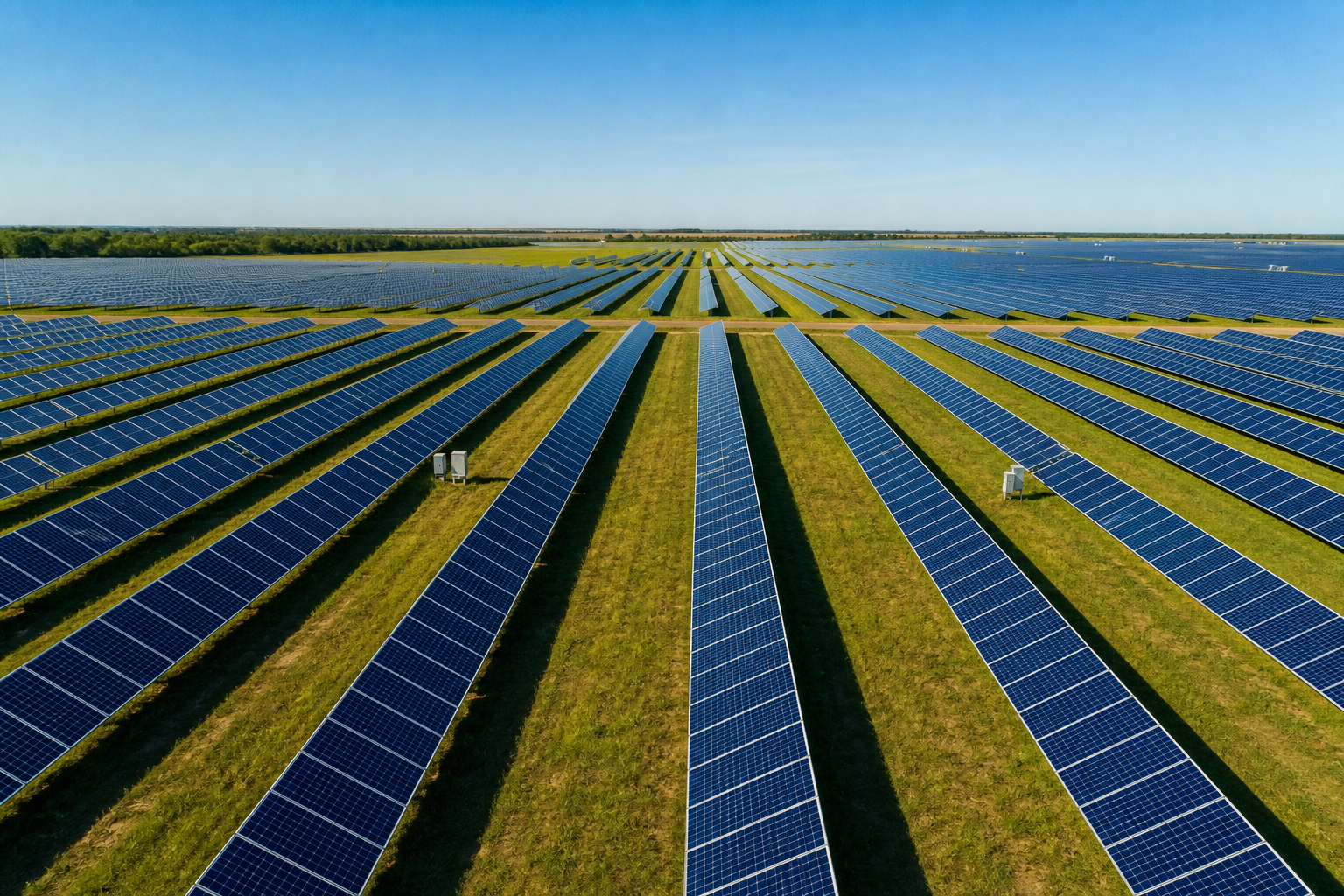
The Central Valley takes ash primarily from Sierra Nevada foothill fires and from smoke transported out of Northern California fire complexes. Fresno, Bakersfield and the surrounding Kern County and Tulare County solar farms see exposure most years, and the ash lands on top of the valley’s agricultural dust.
Inland Empire installations in Riverside and San Bernardino counties sit near wildland-urban interface zones and can take direct, heavy ash-fall from nearby fires rather than fine transported smoke. Close-source ash is coarser and heavier and needs a more thorough wash.
Antelope Valley and Mojave-fringe arrays near Lancaster and Palmdale see both local fire risk and transported smoke from fires across Southern California, on top of the desert dust that already loads those sites.
San Diego and Imperial County installations face Santa Ana-driven fires that move fast and deposit ash across wide areas. The same offshore winds that drive the fire then carry the ash to arrays well away from the burn.
Bay Area and Sacramento region sites see transported smoke from Northern California fires. Deposition is usually lighter than in the Southern California fire zones, but a long fire season adds up.
What preventive maintenance reduces the impact of wildfire ash on California solar arrays?
Wash before fire season. Ash landing on already-dirty glass compounds the problem, so a late-summer wash on a high-soiling site means the ash-fall, when it comes, lands on clean glass and comes off more easily.
Manage vegetation. Clearing growth under and around a ground-mount or utility-scale array reduces the fuel load that could carry fire into the site, and it is a compliance and insurability question in California regardless of ash. Our vegetation management services page covers scope.
Establish a baseline. A documented condition record before fire season, with before-and-after production data where monitoring allows, gives you something to compare against after an event. Our Soiling and Recovery Report shows what that looks like.
Have a provider lined up. After a regional fire, every array in the area wants washing in the same two weeks. Operators with a standing relationship get scheduled first.
How should California solar asset managers evaluate post-fire array condition?
Walk or fly it. Visual inspection, or drone imagery on large sites, identifies the deposition pattern and any physical debris from the fire.
Read the production data. Comparing output after the smoke cleared against expected output for the measured irradiance quantifies the soiling loss and helps sequence cleaning across a large array or a portfolio. For CAISO-interconnected farms, that same comparison supports production forecasting.
Confirm the recovery. After the wash, the production gap should close. If it does not, the remaining loss is not soiling and should be investigated as an equipment issue. That test is simple and it is conclusive.
Every Detail Solar works with California O&M providers and asset managers to fit ash response into the broader maintenance program. Crews carry general liability and workers compensation coverage, with a certificate of insurance available on request. Start with our solar panel cleaning services, carport and canopy or California location pages.