
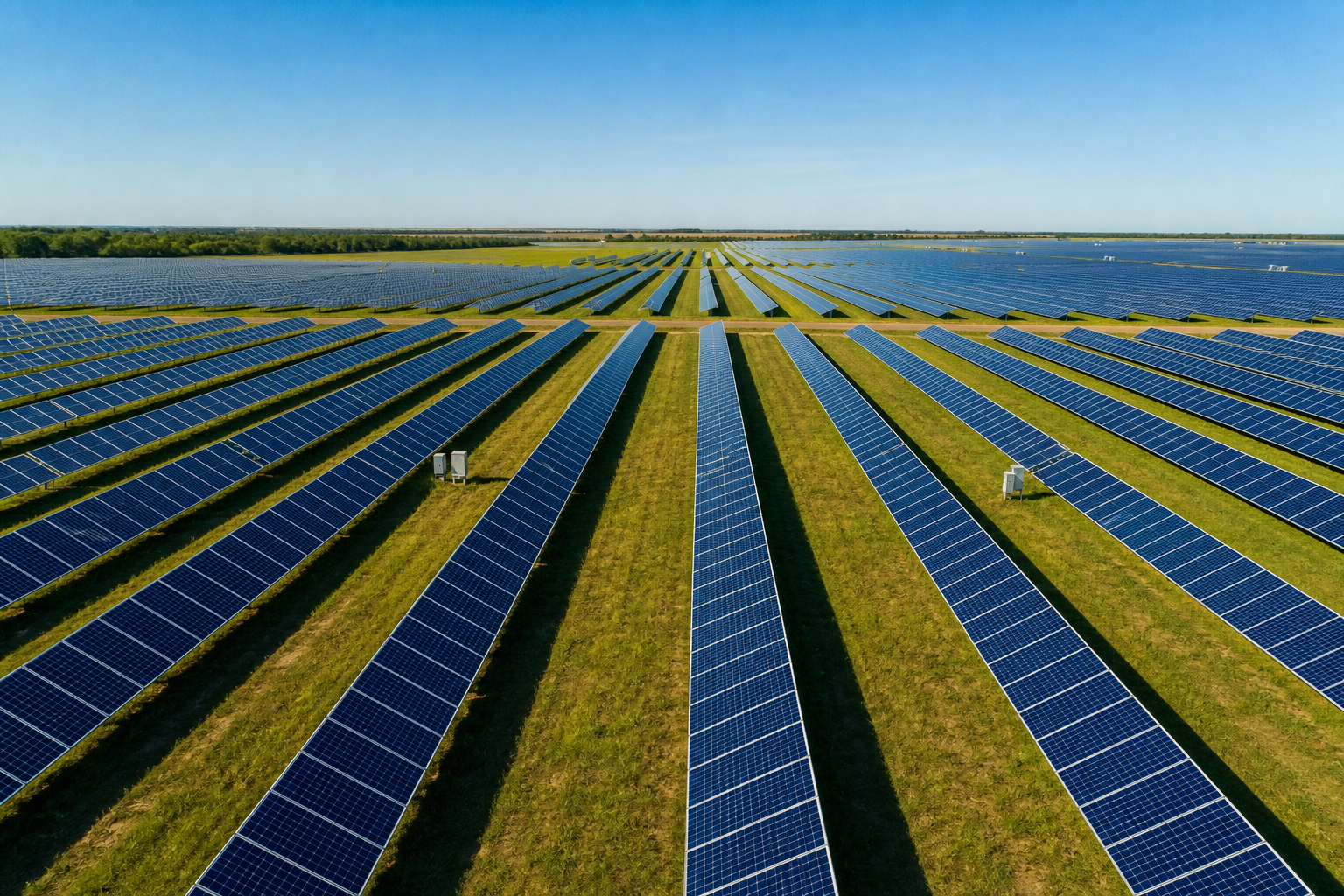
Every Detail Solar cleans commercial solar arrays across California, where two very different soiling drivers - wildfire ash and Central Valley agricultural dust - push soiling losses well above the national average. California has more commercial solar than any other state and some of the harshest soiling conditions, which is exactly why a measured, site-specific cleaning program matters more here than almost anywhere.
California's two soiling stories
Most states have one dominant soiling driver. California has two, and they behave differently:
- Wildfire ash. Fire season deposits fine, sticky ash across huge areas - not just near the burn. Ash bonds to glass and resists rain, so it suppresses output until washed. An ash-fall wash is often a California array's single highest-return service of the year.
- Central Valley agricultural dust. Tillage, harvest, orchard pollen, and a months-long dry summer create relentless accumulation with no natural rinse. Ground-mount and rooftop arrays near farmland soil fast and stay soiled.
The U.S. National Renewable Energy Laboratory (NREL) puts average U.S. soiling loss around 3 to 5 percent annually; in the dry, dusty, fire-exposed parts of California, the real figure runs higher.
How we clean in California
We match the method to the mount and the mess. Ground-mount arrays near agriculture get wash-plus-vegetation scoping so dust and overgrowth don't compound. Rooftop arrays in fire-exposed zones get event-driven ash washes. Utility-scale farms get robotic-plus-manual programs sized to acreage. All scoped with a custom estimate for your site.
California counties and regions we serve
One statewide rule does not fit California, so we publish region pages that describe the actual soiling story in each market. Start with the one closest to your site:
Kern County
Bakersfield, Tehachapi, Mojave. Utility-scale and ag ground-mount; ag dust, oilfield road dust and Mojave wind grit.
Read the Kern County page →Fresno County
Central Valley solar farms and ag-processing rooftops; tilled-farmland, orchard and dairy particulate.
Read the Fresno County page →Inland Empire
Riverside and San Bernardino counties. Warehouse and distribution-center rooftop solar; oily diesel particulate and construction dust.
Read the Inland Empire page →Los Angeles County
Carport and canopy arrays at retail, campus and municipal lots; urban particulate and Santa Ana dust.
Read the Los Angeles County page →Also served: Tulare County, San Diego and Imperial County, Orange County, the Sacramento region, the Bay Area, and the Mojave and Antelope Valley around Lancaster and Palmdale. In the meantime, the Central Valley cleaning-frequency answer, the autumn soiling article and the wildfire ash remediation guide cover the statewide pattern.