
24/7 Support Available
Every Detail Solar
Service ยท Utility-Scale

Solar Farm Cleaning for Utility-Scale Arrays

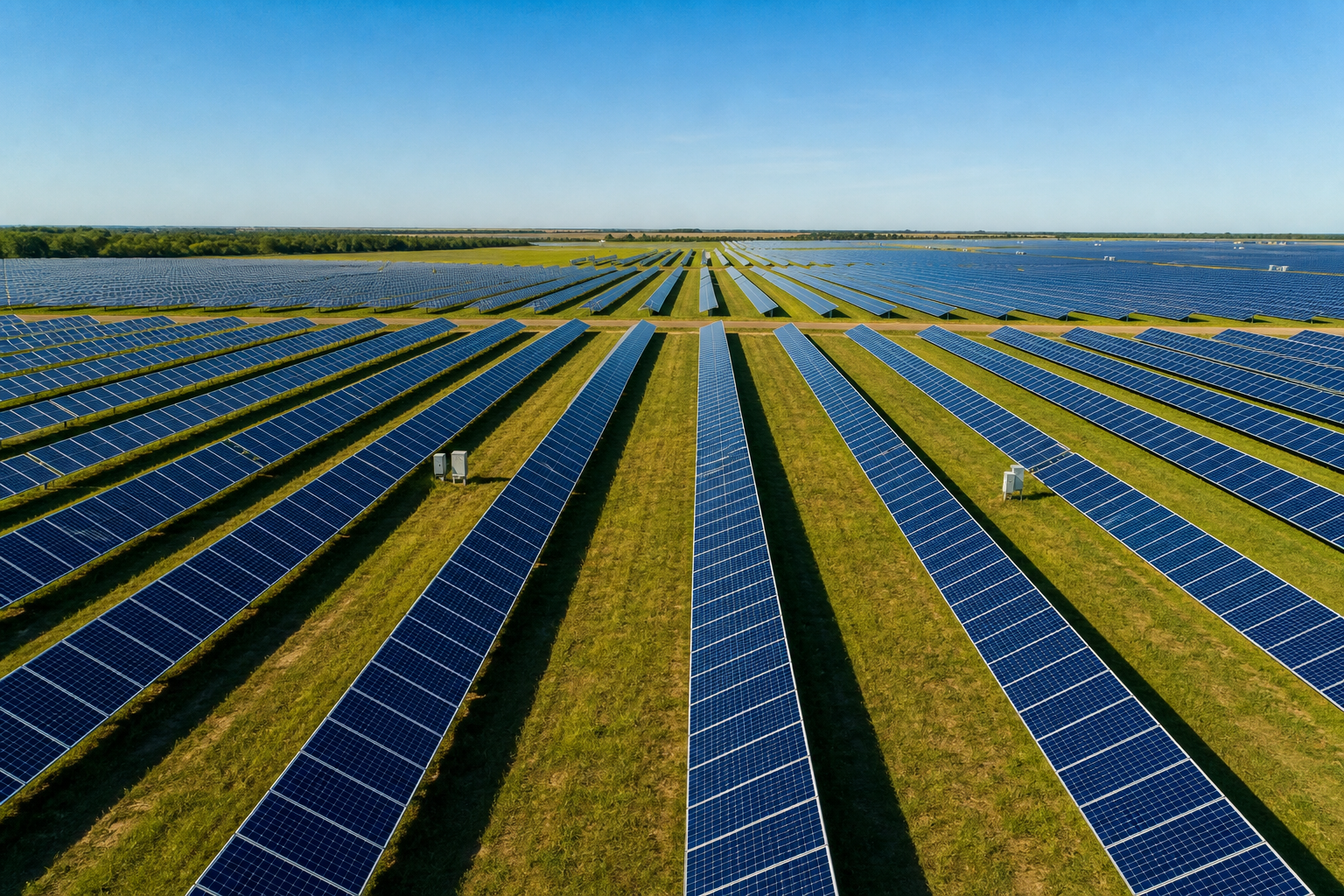
Utility-scale solar farm being cleaned by Every Detail Solar crews

Every Detail Solar cleans utility-scale solar farms - multi-megawatt ground-mount and tracker arrays - combining robotic and manual cleaning by row geometry and verifying the result against your string-level monitoring. This page is for O&M managers and asset owners who need soiling recovery they can put in front of finance, not a vague "we clean panels" pitch.

Who this is for

Solar farm O&M teams, IPPs, and asset managers running arrays where a few points of soiling loss is real six-figure revenue. If a 2 to 3 percent soiling loss on your portfolio translates to hundreds of thousands of dollars a year - as it does on large arrays - a documented wash program is an operating decision, not a cosmetic one.

What happens on site

StageWhat we do
SurveyGround assessment of soiling, row spacing, access, water sources.
Program designCrew lines and robotic/manual mix matched to row geometry and acreage.
WashDeionized water, row-by-row to preserve generation.
VerifyString-level pre/post output, normalized, documented recovery report.

Why operators choose us for utility-scale

  • Predictable scheduling means a schedulable, budgetable multi-day program.
  • Robotic + manual mix so uniform rows go fast and edges/hot spots still get done right.
  • Recovery you can prove against your own monitoring, with documented before-and-after production data.
  • Vegetation control available so the result holds between washes (see ground-mount).

What is included in a solar farm program

  • Drone and ground-level soiling assessment
  • Robotic and manual cleaning equipment matched to row geometry
  • Deionized water systems for a spot-free finish
  • Coordinated multi-acre wash schedule built around your dispatch and curtailment plan
  • String-level performance monitoring integration
  • Before-and-after reporting formatted for your O&M records, PPA compliance reporting, or investor review

Integrated vegetation mowing for solar arrays

Uncontrolled vegetation beneath and around panels causes shading losses, raises fire risk, and gives rodents habitat near wiring. Most solar farm leases and interconnection agreements require vegetation control. We maintain the clearance heights specified by equipment manufacturers, prevent erosion, and coordinate mowing with washing visits so one mobilization covers both. See vegetation management services.

Safety and site compliance

Utility-scale sites need contractors who follow electrical safety protocols and site-specific rules. Every Detail Solar carries general liability and workers compensation coverage, follows lockout-tagout procedures when working near electrical infrastructure, and arrives with the PPE and equipment the site requires. We coordinate with site managers so cleaning activity fits your operating schedule.

Utility-scale solar in California

California carries the densest concentration of utility-scale solar in the country, and most of it sits in the state's highest-soiling environments: the southern San Joaquin Valley around Bakersfield, the Antelope Valley and Mojave fringe around Lancaster and Palmdale, and the Imperial Valley. These are CAISO-interconnected sites where soiling loss through the summer and autumn dry season is paid at the hours when production is worth the most. Kern County is the worked example: agricultural dust, oilfield road dust and Mojave wind grit on the same glass, with almost no rain to rinse any of it. Our answer page on how often Central Valley solar farms should be cleaned covers the seasonal schedule, and the California page covers the rest of the state.

When utility-scale cleaning is not worth it

If your farm sits in a high-rainfall, low-soiling region and your monitoring shows a soiling ratio near 0.99, a full-array wash may not clear its cost. We will tell you that, and recommend event-driven washing (after a dust storm or ash-fall) instead of a fixed calendar. Honest scoping is how we earn the recurring contract on the sites that need it.

Related: ground-mount cleaning · commercial rooftop · Kern County · Fresno County · vegetation management · what is in a solar farm mowing contract · how we price

Frequently asked questions

What is utility-scale solar panel cleaning? +

Utility-scale solar panel cleaning is the scheduled washing of large ground-mount and tracker arrays - typically multi-megawatt solar farms spanning many acres - to recover production lost to soiling. Every Detail Solar combines robotic and manual cleaning by row geometry and verifies recovery against string-level monitoring.

How is a solar farm wash scoped and scheduled? +

We scope each site by panel count, row geometry, travel, water logistics, and how heavily it is soiled, then build a custom estimate and schedule around your operations. See how we price for our approach.

Will cleaning interrupt generation? +

Minimally. We schedule around low-irradiance windows and your dispatch or curtailment plan, and we clean row-by-row so the array keeps producing during the wash. We coordinate directly with your O&M team.

How do you prove the cleaning was worth it? +

We integrate with your inverter monitoring to capture pre- and post-wash output, normalize for irradiance and temperature, and hand back a documented recovery figure.

Do you handle vegetation on solar farms too? +

Yes. Overgrowth shades low rows and drives soiling. We run mowing and vegetation control as an add-on so the wash result actually holds.

What size solar installations does Every Detail Solar service? +

From 100 kW community and commercial ground-mount projects to multi-megawatt utility arrays covering hundreds of acres. We scale crew size and equipment deployment to match your capacity and cleaning window.

How often should utility-scale solar farms be cleaned? +

Most utility-scale solar farms benefit from quarterly professional cleaning, with additional service during periods of heavy pollen, dust storms, or bird activity. Installations near agricultural operations or unpaved roads may need monthly cleaning to hold output.

What cleaning methods do you use on large solar arrays? +

Purified deionized water with soft-bristle brushes on extended-reach equipment, plus semi-autonomous robotic cleaners where row geometry allows. Manual crews handle array edges, soiling hot spots, complex geometries, and tracker rows. No chemicals that could damage panel coatings or leave residue that attracts future buildup.

Can the array stay operational during cleaning? +

Yes, our process is safe for operational arrays. We recommend early morning or late afternoon windows when panel temperatures are lower, which improves cleaning results and reduces thermal stress on the glass.

Do you offer recurring solar farm cleaning contracts? +

Yes. Most of our solar farm clients are on quarterly or biannual cleaning programs. Recurring contracts include consolidated scheduling, multi-season planning, vegetation management, and documented performance trending across all cleans.

Do you work directly with O&M operators and asset managers? +

Yes. We work with operations-and-maintenance firms, asset management companies, and EPC contractors managing solar farms on behalf of tax equity investors or utilities. We can operate under your reporting templates and coordinate with your CMMS scheduling system.

What soiling sources affect large-scale solar farms? +

Dust and agricultural particulates dominate at most rural and agricultural-zone solar farms. Sites near highways, gravel roads, feedlots, or in arid western climates often see the highest soiling rates. Wind-driven sand abrasion and bird activity add to soiling on sites without adequate fencing or habitat buffers.

How do I schedule solar farm cleaning or request a site assessment? +

Contact us with your site name, GPS coordinates or address, system size, and cleaning history if available. We will schedule a site assessment and return a cleaning proposal with a production-loss estimate within two business days.

Get a free production-loss estimate

Send your array size, mount type, and location. We will estimate recoverable output before you commit.