Solar Farm Vegetation Management and Mowing Contracts: What California Operators Should Expect
A solar farm mowing contract buys three things: unshaded modules, a fire-compliant fuel load, and safe work around trackers and buried cabling. It should spell out cutting scope and trigger, a height specification tied to the module edge, exclusion zones around equipment, insurance, and fire-season obligations. Solar farm vegetation management prevents shading losses, reduces fire hazards, and protects electrical infrastructure, which makes it essential for profitable solar operations, and in California, where fire exposure and tracker density are both high, it is a compliance item as much as a maintenance one. For a clause-by-clause walkthrough, see what is actually in a solar farm mowing contract. Uncontrolled vegetation at ground-mounted solar installations can reduce energy production by 10% to 20% while creating serious safety and compliance risks. Every Detail Solar provides professional solar farm vegetation management services including precision mowing, weed control, and integrated maintenance programs designed for commercial solar arrays. This guide explains why vegetation management matters, how to implement effective programs, and what solar farm operators should expect from professional vegetation services.
Why Is Vegetation Management Critical for Solar Farm Performance?
Vegetation management directly impacts solar farm profitability through multiple mechanisms that compound when neglected. Understanding these impacts helps operators prioritize vegetation control as essential maintenance rather than optional landscaping.
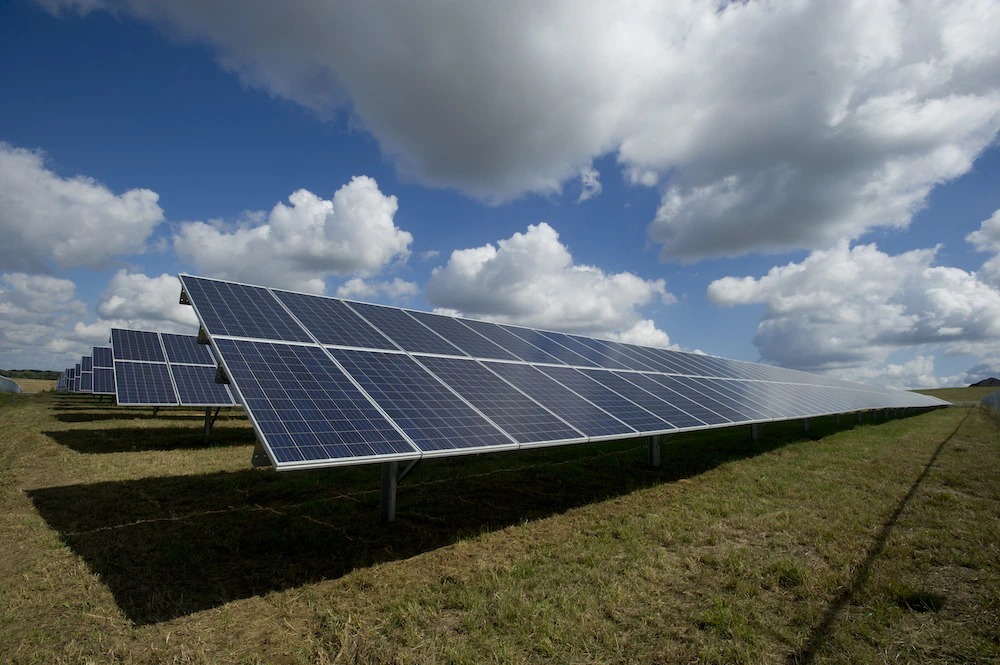
Shading from overgrown vegetation represents the most immediate production impact. Ground-mounted solar panels typically sit 18 to 36 inches above grade at their lowest point. Grass and weeds can reach this height within weeks during peak growing seasons, shading bottom cell rows and triggering bypass diodes that reduce string output. A single row of shaded cells can reduce entire string production by 30% or more due to the series-wired architecture of most solar installations.
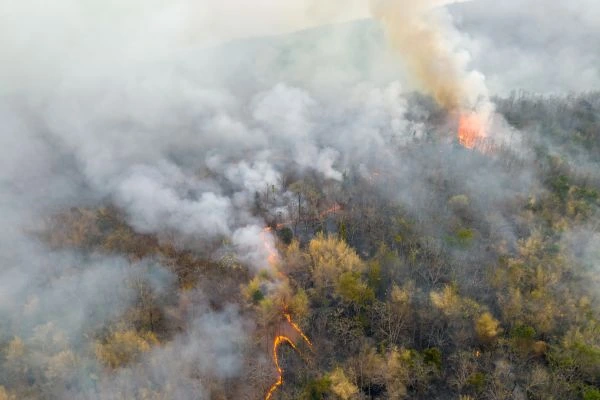
Fire risk escalates dramatically with uncontrolled vegetation. Dry grass beneath solar panels creates continuous fuel loads that can spread flames rapidly across entire installations. Electrical faults, lightning strikes, or external ignition sources can trigger fires that damage or destroy panels, wiring, and inverters. Insurance carriers increasingly require documented vegetation management programs, with some refusing coverage for facilities without active maintenance contracts.
Wildlife habitat concerns also drive vegetation management requirements. Tall grass provides cover for rodents that chew through wiring insulation, causing system faults and fire risks. Ground-nesting birds establish colonies that soil panels and create maintenance challenges. Snakes seeking rodent prey create safety hazards for maintenance personnel. Regular mowing disrupts habitat establishment and reduces wildlife pressure on installations.
Every Detail Solar’s vegetation management programs address all these concerns through scheduled mowing services calibrated to local growing conditions and site-specific requirements.
How Often Should Solar Farms Be Mowed?
Optimal mowing frequency for solar farms depends on climate zone, vegetation species, rainfall patterns, and panel height-though most installations require service every 4 to 8 weeks during growing seasons.
Solar farms in humid southeastern climates with warm-season grasses may need mowing every 3 to 4 weeks from April through October. Installations in arid western regions might require only monthly service during shorter growing seasons. Northern installations with cool-season grasses often need consistent mowing from May through September with reduced frequency in shoulder seasons.
Panel mounting height significantly influences mowing requirements. Fixed-tilt systems with lower mounting profiles require more frequent mowing than tracker systems or elevated fixed-tilt designs. Installations with 24-inch minimum clearance need earlier and more frequent intervention than those with 36-inch clearance.
Every Detail Solar develops customized mowing schedules based on detailed site assessments. We evaluate vegetation species present, historical growth patterns, panel mounting specifications, and local climate data to recommend optimal service intervals. Our monitoring approach adjusts schedules seasonally-increasing frequency during rapid growth periods and reducing service during dormant seasons to optimize maintenance spending.
For most commercial solar arrays in temperate climates, we typically recommend:
- Spring startup mowing (March-April) as vegetation emerges
- Peak season service every 4 to 6 weeks (May-August)
- Fall maintenance mowing (September-October)
- Dormant season assessment with service as needed
What Equipment and Methods Work Best for Solar Farm Mowing?
Solar farm vegetation management requires specialized equipment and techniques that differ significantly from conventional landscaping. Standard lawn care equipment can damage panels, wiring, and racking systems while creating safety hazards for operators.
String trimmers and brush cutters near panel edges throw debris that chips glass and damages anti-reflective coatings. Every Detail Solar uses precision mowing equipment with debris guards and directional discharge systems that direct clippings away from panel surfaces. Our crews maintain strict clearance distances from panel edges, using hand tools only when absolutely necessary with protective barriers in place.
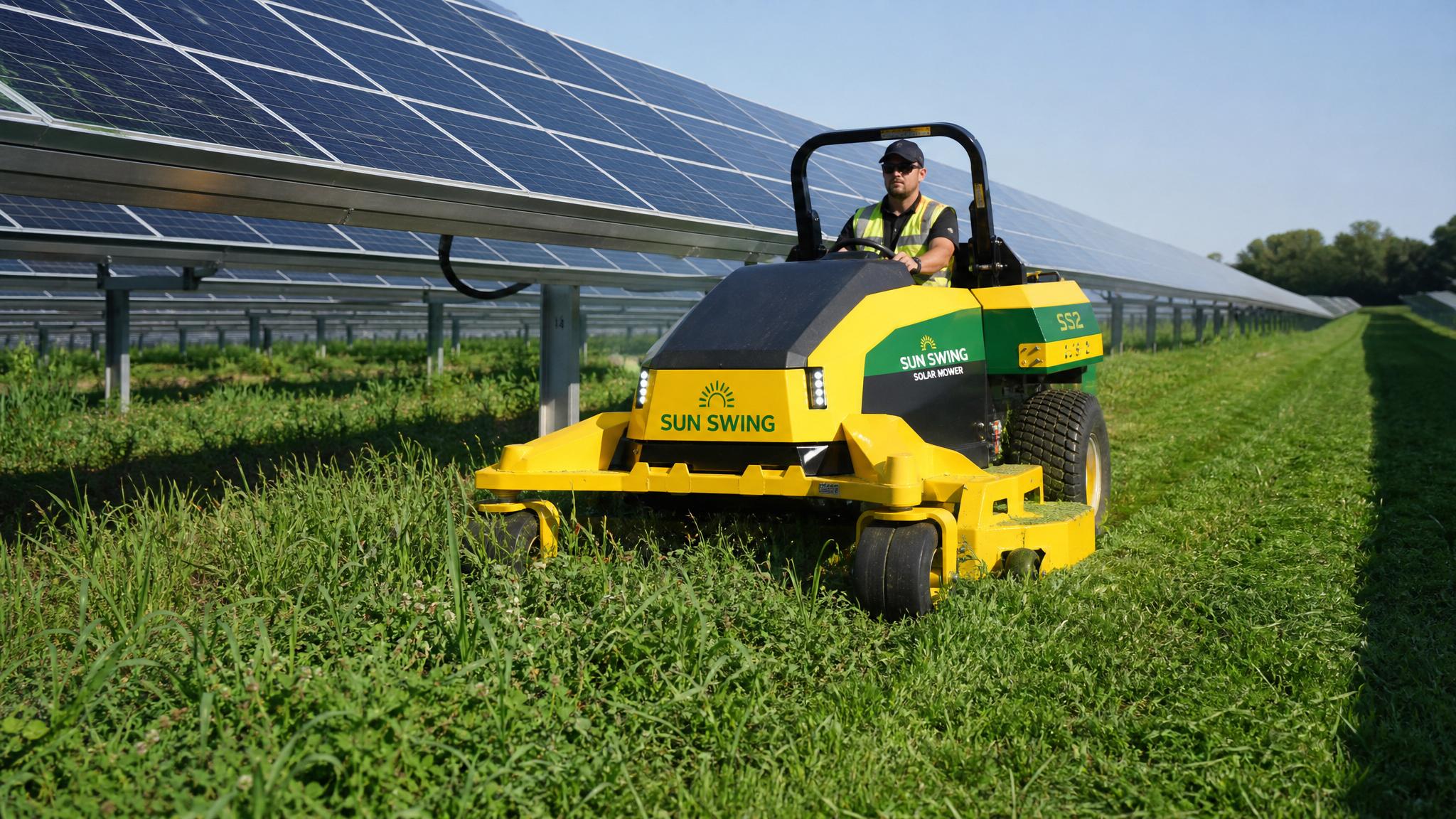
Riding mowers and tractors must navigate between panel rows without contacting racking legs or low-hanging panel edges. Many solar installations have row spacing designed for specific equipment widths. Every Detail Solar maintains a fleet of narrow-profile mowers specifically sized for solar farm applications, including units that fit 8-foot, 10-foot, and 12-foot row spacing common in commercial installations.
Beneath-panel vegetation presents unique challenges since equipment cannot access areas directly under panels. We utilize specialized low-profile mowers and extended-reach tools designed for under-panel mowing. Some installations benefit from vegetation suppression approaches including ground cover fabrics or gravel that reduce under-panel mowing requirements.
Every Detail Solar crews receive specific training on solar farm operations including electrical safety, panel protection protocols, and site-specific navigation requirements. Our supervisors conduct pre-mowing site walks to identify any new hazards, equipment changes, or areas requiring special attention.
What Drives the Cost of Professional Solar Farm Vegetation Management?
Professional solar farm vegetation management is priced per site and per program, based on acreage, mowing frequency and site complexity rather than a flat rate.
Several factors influence vegetation management pricing for commercial solar installations:
Site accessibility affects equipment deployment and crew efficiency. Solar farms with paved access roads, adequate staging areas, and well-maintained internal roads cost less to service than remote installations with rough access or soft soil conditions that limit equipment options.
Panel density and row spacing determine equipment selection and mowing efficiency. Tightly spaced panels require more careful navigation and specialized equipment, increasing per-acre service time. Installations with wider spacing allow faster mowing with standard commercial equipment.
Terrain complexity impacts both efficiency and equipment requirements. Level sites mow quickly with minimal equipment strain. Sloped installations require additional safety measures and may limit equipment options, increasing service costs.
Vegetation type influences both mowing frequency and difficulty. Native grass installations with controlled seed mixes require less frequent service than sites with invasive weed pressure. Woody vegetation requiring brush cutting costs more to control than grass-only sites.
Every Detail Solar provides a detailed program quote based on a site assessment, with contract pricing for larger installations and multi-year maintenance programs. Our integrated programs combining vegetation management with panel cleaning services offer additional savings through reduced mobilization costs and streamlined scheduling.
How Do Integrated Maintenance Programs Benefit Solar Farm Operations?
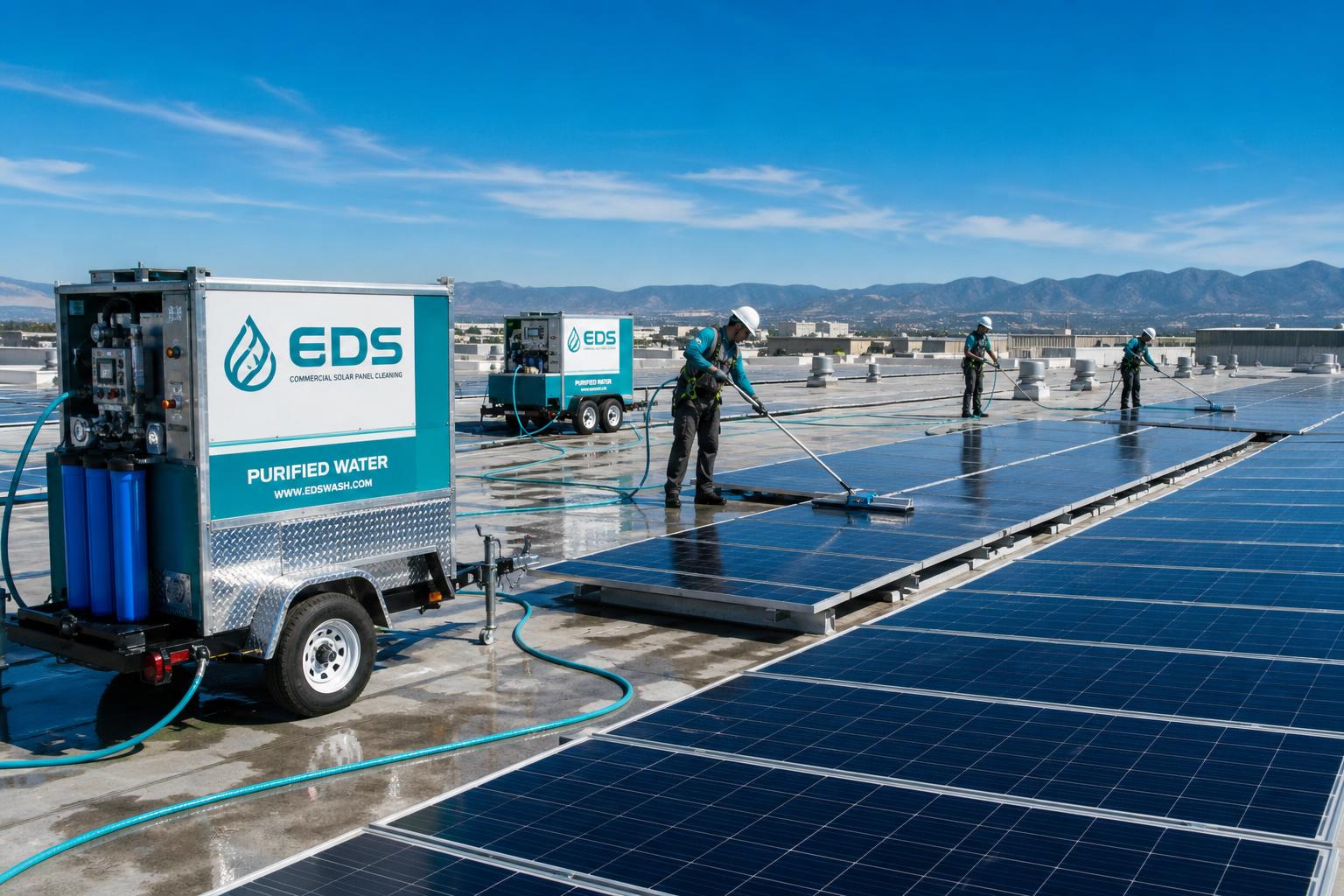
Integrated maintenance programs combining vegetation management and panel cleaning deliver superior results and cost efficiency compared to managing services separately. Every Detail Solar offers integrated solar farm maintenance because our clients consistently achieve better outcomes with coordinated programs.
Coordinated scheduling reduces total mobilization costs. Sending separate crews for mowing and cleaning doubles travel expenses, site access coordination, and administrative overhead. Integrated programs bring comprehensive maintenance capabilities to each site visit, accomplishing more work per mobilization.
Cross-trained crews identify issues beyond their immediate task. Every Detail Solar’s vegetation crews report panel damage, wildlife intrusion, drainage problems, and other concerns observed during mowing operations. Cleaning crews note vegetation encroachment and areas needing attention. This comprehensive monitoring catches problems early before they impact production or create safety hazards.
Single-point accountability simplifies vendor management for solar farm operators. Instead of coordinating multiple contractors with separate schedules, insurance requirements, and contact points, integrated programs provide one relationship managing complete site maintenance. Every Detail Solar serves as your comprehensive maintenance partner with clear responsibility for overall site condition.
Performance-based programs align incentives with production outcomes. Every Detail Solar offers maintenance contracts with service levels tied to production metrics, ensuring our team remains focused on maximizing your energy output rather than simply completing scheduled tasks.
Our integrated programs include detailed reporting documenting all maintenance activities, site condition assessments, and recommendations for addressing identified issues. These records support warranty compliance, insurance requirements, and long-term asset management planning.
Frequently asked questions
Can sheep or goats replace mowing at solar farms?
Grazing animals work for some installations but create challenges including panel soiling from droppings, potential wire damage from chewing, and fencing requirements. Grazing also requires animal husbandry expertise most solar operators lack. Mechanical mowing provides more predictable, controllable results for most commercial solar farms.
What ground cover is best under solar panels?
Low-growing native grass mixes requiring minimal mowing work well for most installations. Clover and other legumes fix nitrogen and stay low but may attract bees that complicate maintenance. Gravel or ground fabric eliminates vegetation but increases costs and may create drainage issues. Every Detail Solar can recommend appropriate ground cover based on your climate and site conditions.
Does vegetation management affect solar panel warranties?
Most panel warranties require keeping vegetation from contacting panels and maintaining proper drainage around installations. Documented vegetation management programs support warranty compliance by demonstrating proper maintenance practices. Neglected vegetation causing panel damage may void warranty coverage.
How does vegetation affect solar farm insurance?
Insurance carriers increasingly require vegetation management as a condition of coverage. Fire damage claims may be denied if investigation reveals inadequate vegetation control. Documented professional maintenance programs demonstrate due diligence and may qualify installations for preferred insurance rates.
What happens to grass clippings after solar farm mowing?
Mulching mowers chop clippings finely and distribute them as natural fertilizer, which works well for most installations. Some sites require clipping collection to prevent debris accumulation on panels or drainage interference. Every Detail Solar evaluates each site to determine optimal clipping management approaches.
What is included in solar farm vegetation management?
Mowing between and under module rows, perimeter and fence-line control, access road clearance, and controlled work around tracker drives, combiner boxes, and buried cable runs. The objective is preventing shading, protecting equipment, and controlling fuel load, not site appearance.
How does vegetation actually reduce solar production?
Growth that reaches the lowest edge of a module shades the bottom cells. Because cells in a string are electrically linked, shading a small area can disproportionately drag the output of a much larger section. On tracker sites the risk is higher because the lowest edge moves through the day.
Why does fuel load matter at a solar site?
Accumulated dry vegetation under and around an array is fire fuel sitting directly beneath energized equipment. In fire-exposed regions it is a compliance obligation and an insurability question, not just a maintenance preference.
Can a regular landscaping company mow a solar farm?
It is not advisable. Solar sites have buried cabling, tracker drive assemblies, torque tubes, and energized equipment that general landscaping crews are not trained to identify or avoid. The cost of one severed cable run exceeds any saving on the mowing itself.
Next step
Protect your solar investment with professional vegetation management from Every Detail Solar. Our specialized solar farm mowing services keep your installation safe, compliant, and producing maximum energy. Contact us for a free site assessment and a customized maintenance proposal.
Related: Vegetation management services | Utility-scale solar farm cleaning | Kern County solar cleaning and vegetation management | Solar farm cleaning services | Ground-mount array cleaning | About Every Detail Solar | Contact us