What Is Actually in a Solar Farm Mowing Contract?
A solar farm mowing contract should define five things explicitly: the scope and frequency of cutting, the height specification, how equipment will work around trackers and cabling, who carries the liability and insurance, and what happens during fire season. Contracts that leave any of those vague are where disputes start. Here is what each one means and what to look for.
Why is a solar farm mowing contract different from a landscaping contract?
A landscaping contract buys appearance. A solar mowing contract buys production protection and risk management on an energized industrial site. The deliverable is not a tidy site, it is an unshaded, fire-compliant, tracker-safe array. Everything else follows from that difference.
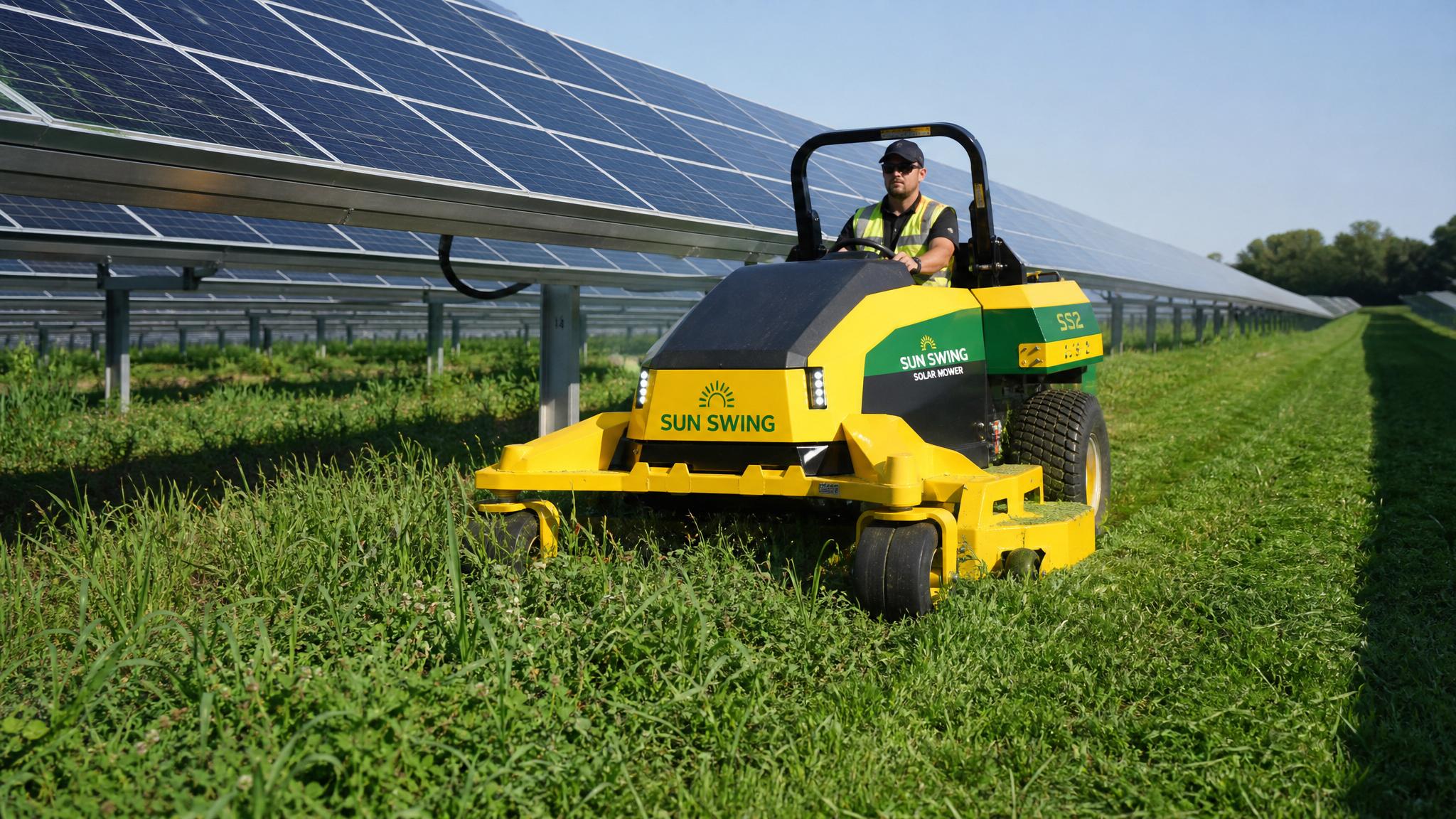
That is why a general landscaping crew is usually the wrong bidder even when the price is right. The work happens between live rows, over buried cable runs and around tracker drive assemblies. The people doing it need to have been trained on arrays, not on lawns. Our vegetation management services page explains how we staff that work.
What scope and frequency should the contract specify?
It should name the cutting cycle, what triggers an additional cut, and what the cut covers: between rows, under modules, perimeter, fence line, access roads, and around equipment pads. Under-module growth is the part most often left out and the part that most often causes shading.
A count alone (“eight cuts per year”) is weaker than a trigger. Growth does not follow the calendar; it follows rainfall and temperature. A well-written scope says what condition prompts a cut and how quickly the contractor responds once it does.
What height specification should be in the contract?
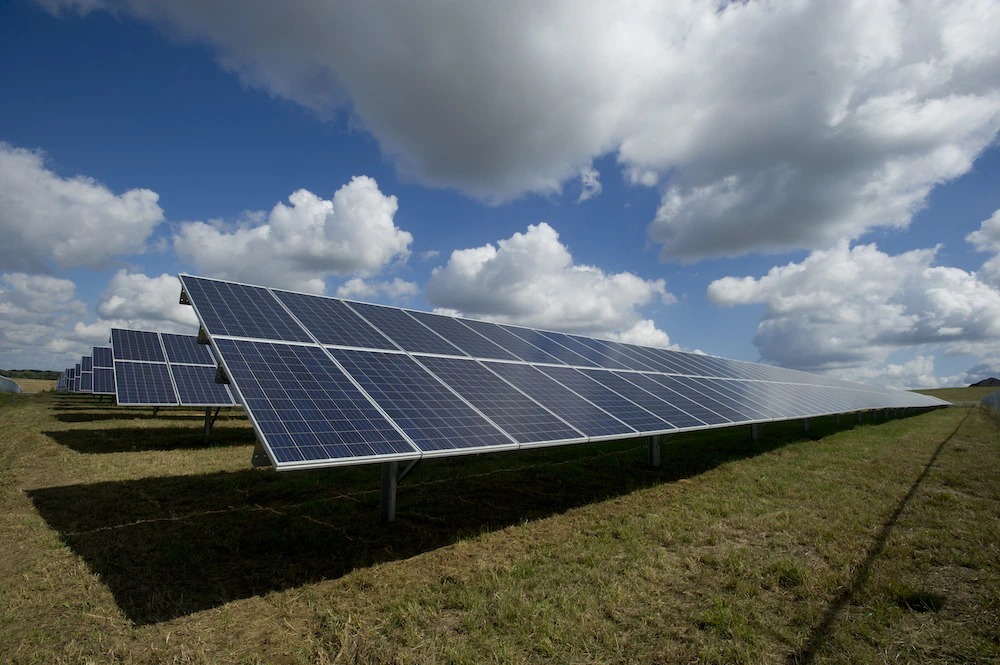
The spec should be tied to the lowest edge of the modules at their lowest tracker position, not to a generic number. A single-axis tracker site has a moving lower edge, which means a height that is fine at noon can be shading at dawn and dusk.
Fixed-tilt sites are simpler, but the same principle holds: the number in the contract should come from the array geometry on that site, not from a template.
How should the contract address trackers, cabling, and buried infrastructure?
It should require a documented site walk and hazard marking before equipment enters, name the exclusion zones around tracker drives and combiner boxes, and assign responsibility for damage to cabling. This is the clause that gets written only after someone has already cut a cable.
Ask the bidder how they mark hazards, what equipment they run between rows, and what they do differently around torque tubes and drive lines. The answer tells you whether they have done this before.
Who carries the insurance and what coverage should be named?
General liability and workers compensation at minimum, with a certificate of insurance provided before mobilization and the site owner named appropriately. On an energized site this is not boilerplate.
Every Detail Solar carries general liability and workers compensation coverage for solar site work, and a certificate of insurance is available on request before any job begins.
What should the contract say about fire season?
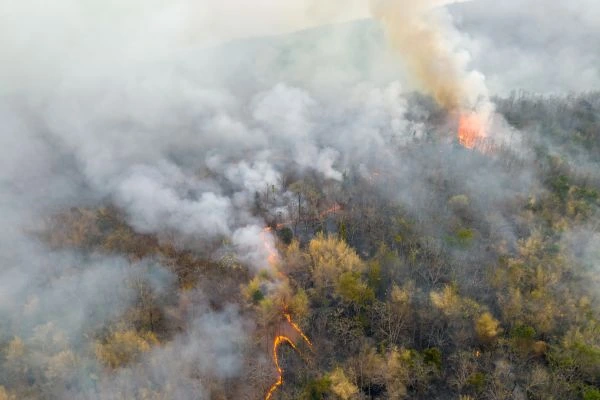
Fuel load management obligations, any local fire authority requirements for defensible space around the array and equipment, and whether hot-work restrictions during red-flag conditions change the cutting schedule. In California this is often the clause with the most regulatory weight.
Sites in Kern County and the rest of the southern San Joaquin Valley, and ground-mount sites across the Inland Empire and the Antelope Valley, carry real fire exposure. A contract that is silent on fire season is incomplete for a California site.
What does good vegetation management actually protect?
Production, through avoided shading. Equipment, through tracker and cable protection. Insurability and compliance, through fuel load control. Those are the three things the contract is really buying.
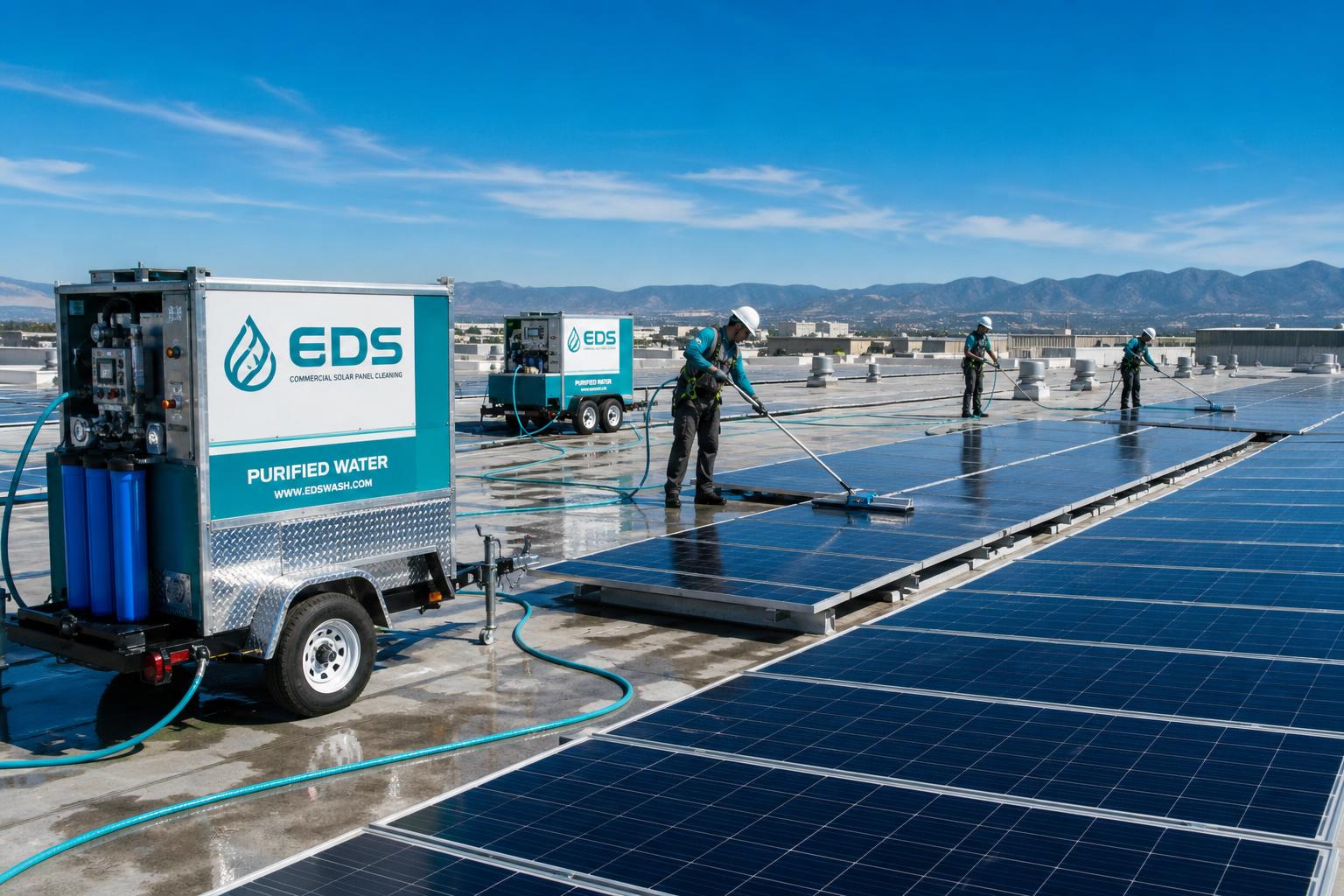
If you are also putting panel washing out to bid, our solar farm cleaning services, utility-scale cleaning and ground-mount cleaning pages cover how the two scopes fit together. Mowing should happen before washing so cut debris does not land on clean glass, and a single provider for both removes the coordination problem entirely.