
Solar Farm Cleaning Services
Utility-scale and ground-mount cleaning programs engineered for acreage. Robotic equipment, certified crews, and documented output recovery.
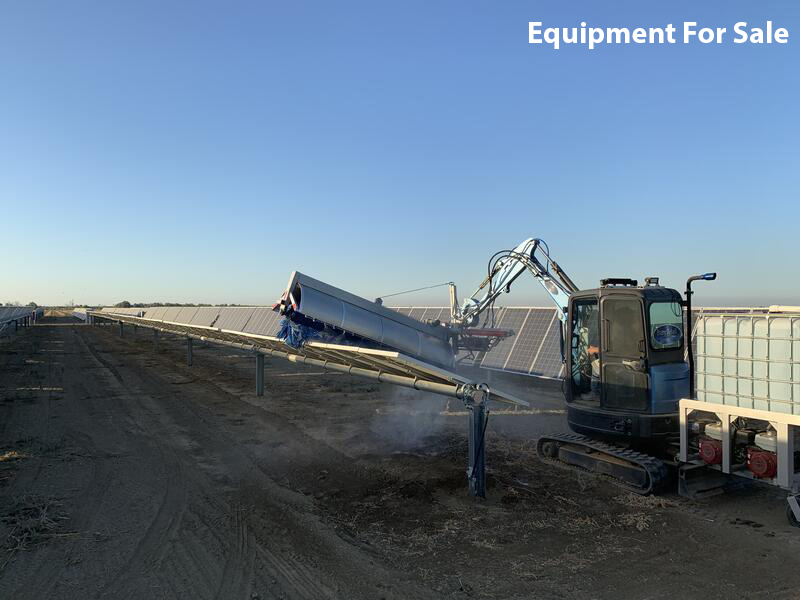
Solar farms operate at scales where every percentage of soiling translates into significant lost revenue. Every Detail Solar designs cleaning programs around your array geometry, operations schedule, and string-level monitoring. The result is a cleaning program that pays for itself in recovered output.
What is included
- Drone and ground-level soiling assessment
- Robotic and manual cleaning equipment matched to row geometry
- Deionized water systems for spot-free finish
- Coordinated multi-acre wash schedule
- String-level performance monitoring integration
- Comprehensive before-and-after reporting
Our process
Site survey
Drone and ground assessment of soiling, row spacing, and access.
Program design
We engineer a cleaning program around your array geometry and operations.
Execute
Crews and robotic equipment deployed for coordinated multi-acre wash.
Verify
String-level output recovery measured and reported.
Why Every Detail Solar
Scale-built equipment
Robotic cleaners and large-volume DI water systems for utility arrays.
Acreage experience
Ground-mount arrays washed efficiently, scheduled around your operations.
Operations friendly
We work around your dispatch and curtailment schedules.
Verified output recovery
String-level monitoring integration confirms the cleaning ROI.
California solar farms: see Kern County, Fresno County and how often Central Valley solar farms should be cleaned.
Frequently asked questions
What scale of solar farm do you service? +
From a few hundred kW ground-mount projects to multi-megawatt utility arrays covering hundreds of acres. We scale crew size and equipment deployment to match your MW capacity and cleaning window.
Do you use robotic cleaning equipment for solar farms? +
Yes. We deploy semi-autonomous robotic cleaners for utility-scale arrays where row geometry allows it. Manual crews handle array edges, soiling hot spots, complex geometries, and tracker-equipped rows. The blend of robotic and manual cleaning maximizes throughput without cutting corners.
How long does a typical solar farm cleaning take? +
It depends on total acreage, soiling level, array density, and crew size. We plan multi-day programs with clear daily schedules so your O and M team can coordinate access and monitoring. A 5 MW fixed-tilt site typically runs 2 to 4 crew-days.
How do you measure and document solar farm cleaning ROI? +
We integrate with your string-level or inverter-level monitoring to capture production baselines before cleaning and document recovered output after. The performance recovery report is formatted for your O and M records, PPA compliance reporting, or investor review.
Do you offer recurring solar farm cleaning contracts? +
Yes. Most of our solar farm clients are on quarterly or biannual cleaning programs. Recurring contracts include consolidated scheduling, multi-season planning, vegetation management, and documented performance trending across all cleans.
What is vegetation management and why does it matter for solar farms? +
Vegetation management is the mowing, herbicide application, and perimeter maintenance that keeps growth from shading panels and creating fire risk beneath ground-mount arrays. Most solar farm leases and interconnection agreements require vegetation control. We coordinate cleaning and vegetation management together to reduce mobilization costs.
How much does solar farm cleaning cost? +
Utility-scale and large ground-mount cleaning is typically priced per watt or per acre depending on site configuration. Send us your site address, total installed kW, row layout, and soiling environment and we will return a detailed scope and pricing within one business day.
Do you work directly with O and M operators and asset managers? +
Yes. We work with operations-and-maintenance firms, asset management companies, and EPC contractors managing solar farms on behalf of tax equity investors or utilities. We can operate under your reporting templates and coordinate with your CMMS scheduling system.
What soiling sources affect large-scale solar farms? +
Dust and agricultural particulates are the dominant soiling sources for most rural and agricultural-zone solar farms. Sites near highways, gravel roads, feedlots, or in arid western climates often see the highest soiling rates. Wind-driven sand abrasion and bird activity add to soiling on sites without adequate fencing or habitat buffers.
How do I schedule solar farm cleaning or request a site assessment? +
Contact us through this page or the main contact-us page with your site name, GPS coordinates or address, system size, and cleaning history if available. We will schedule a site assessment and return a cleaning proposal with production-loss estimates within two business days.
Ready to maximize your solar output?
Get a free assessment for your site. No commitment, just clear answers and pricing.