
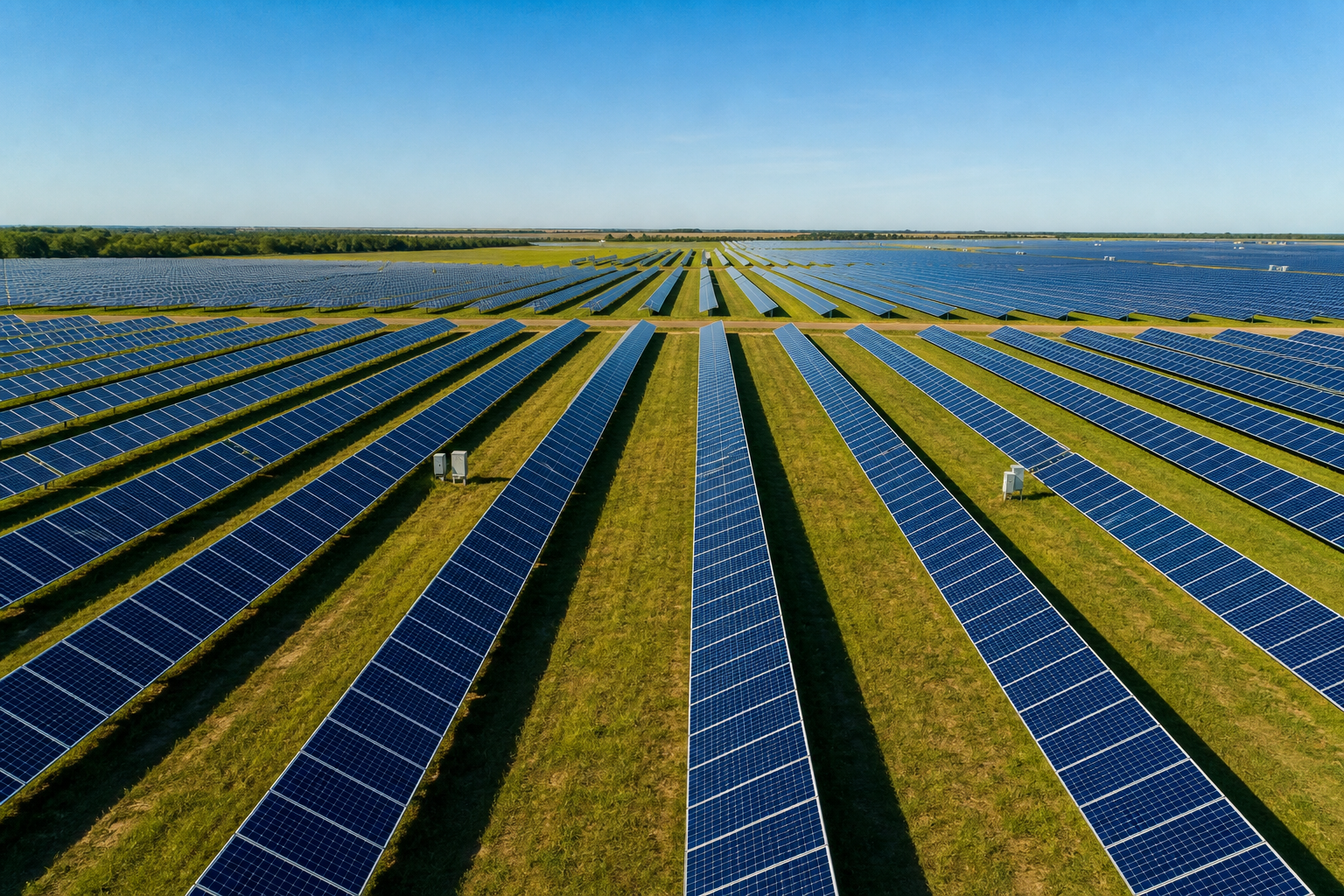
Tulare County solar arrays collect dust from three sources at once: dairy operations, orchards and row crops, and farm traffic on unpaved roads, all through a dry season that runs most of the year. Every Detail Solar washes commercial, agricultural and utility-scale arrays across the county, from Visalia and Tulare rooftops to ground-mount systems in the farmland around Porterville and Dinuba, and manages vegetation on ground-mount sites.
Why do Tulare County solar arrays get dirty so fast?
Tulare County arrays sit in the southern San Joaquin Valley, where dust from dairies, orchards and tilled fields stays in the air instead of clearing. A long dry season means little rain to rinse it off, and fine organic dust bonds to glass rather than blowing away, so production falls a little more every week between washes.
Three sources stack up here:
- Dairy operations. Tulare County is one of the leading dairy counties in the country. Feed, bedding and manure handling put fine organic particulate into the air all year, not only at harvest.
- Orchards and row crops. Citrus, nut and tree crops, plus tillage and harvest on open fields, add seasonal dust loads, with pollen in spring.
- Unpaved roads. Farm traffic on dirt and gravel roads throws coarse dust that travels further than most site owners expect.
How much production does a dirty array lose?
Soiling loss is gradual and easy to miss. An array keeps running while it underproduces, and unless soiling is tracked separately from weather it often gets blamed on a bad month. In a high-dust, low-rainfall county like Tulare, the loss runs higher than national averages, so wash intervals have to come from the site itself.
Our answer page on soiling loss explains how to measure it, and the Central Valley cleaning-frequency answer covers how often utility-scale sites in the valley are typically washed.
What does vegetation management involve on Tulare County solar sites?
On ground-mount sites, vegetation between and under rows shades the lowest cells, can interfere with tracker movement and cabling, and builds fuel load ahead of fire season. We mow and manage vegetation on solar sites specifically, with crews trained to work between live rows, around racking, cabling and equipment pads.
See solar farm vegetation management for the service, and what should be in a solar farm mowing contract before you put one out to bid.
How does Every Detail Solar work in Tulare County?
We start by establishing the site's actual soiling rate, looking at production data against irradiance and at the dust sources around the array, then set a wash and mow schedule to match. Panels are washed with purified water, so no mineral film is left behind when they dry, which matters wherever local water is high in minerals.
We work on operating arrays and schedule around production and safety requirements. Crews carry general liability and workers compensation coverage, and a certificate of insurance is available on request. For large sites, see utility-scale solar farm cleaning; for ground-mount systems, see ground-mount cleaning; for carport arrays, see carport and canopy cleaning. For Visalia businesses, see commercial solar panel cleaning in Visalia.
Tulare County areas we serve
Visalia, Tulare, Porterville, Dinuba, Exeter, Lindsay, Farmersville, Woodlake and the unincorporated agricultural areas of the county, including ground-mount sites on the farmland between the cities. Tulare County sits in the southern San Joaquin Valley between Fresno County to the north and Kern County to the south.
Related: solar panel cleaning in California · Fresno County · Kern County · the commercial cleaning guide