Solar Panel Cleaning for Data Centers: Ensuring Uninterrupted Power Supply
Solar Panel Cleaning for Data Centers: Ensuring Uninterrupted Power Supply
Data centers are the backbone of our digital world, powering everything from cloud computing to streaming services. As these facilities strive for energy efficiency and sustainability, many are turning to solar power. However, the effectiveness of solar panels relies heavily on their cleanliness. This blog post explores the critical nature of clean solar panels for data centers and other industries that depend on uninterrupted power supply.
The Importance of Clean Solar Panels
How Dirt Affects Solar Panel Efficiency
Solar panels work by converting sunlight into electricity. When dirt, dust, or debris accumulate on the surface of solar panels, they block sunlight from reaching the photovoltaic cells. This can significantly reduce the panel’s efficiency, sometimes by up to 25% or more. For data centers that rely on solar power, this loss in efficiency can translate to a substantial decrease in energy production.
The Impact on Data Center Operations
Data centers require a constant, reliable power supply to maintain their operations. Any interruption or reduction in power can lead to:
- Service outages
- Data loss
- Damage to equipment
- Financial losses for the company and its clients
Clean solar panels ensure that data centers can maximize their solar energy production, reducing the risk of these costly problems.
Solar Panel Cleaning for Data Centers
Frequency of Cleaning
The frequency of solar panel cleaning depends on various factors, including:
- Local climate and weather conditions
- Proximity to pollution sources
- Tilt angle of the panels
In general, data centers should aim to clean their solar panels at least twice a year. However, in dusty or high-pollution areas, more frequent cleaning may be necessary.
Cleaning Methods
There are several methods for cleaning solar panels:
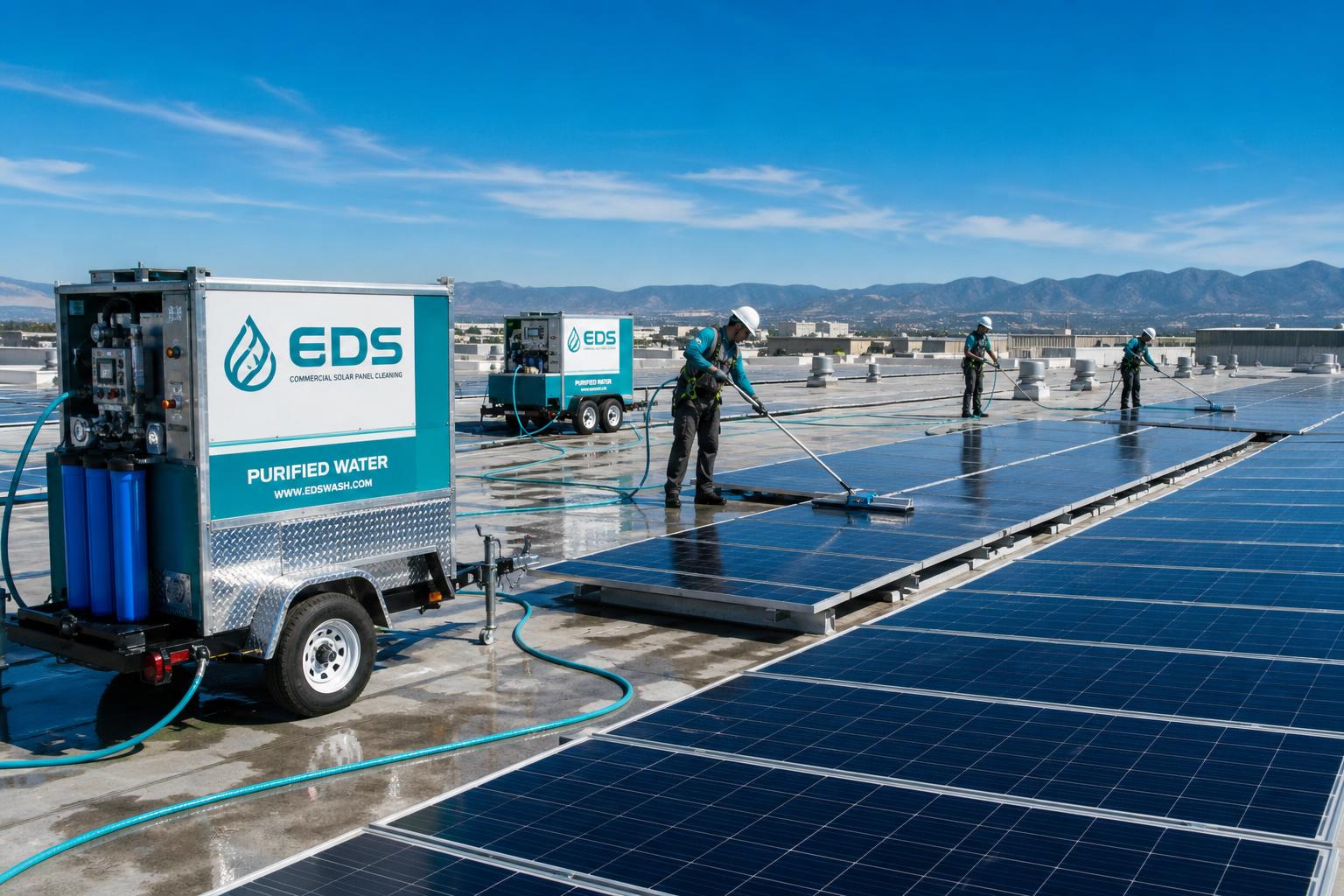
- Manual cleaning with water and soft brushes
- Automated cleaning systems
- Robotic cleaning devices
Each method has its pros and cons, and the choice often depends on the size of the installation and the specific needs of the data center.
Safety Considerations
Cleaning solar panels can be dangerous, especially for large-scale installations on data center roofs. It’s crucial to:
- Use proper safety equipment
- Follow manufacturer guidelines
- Consider hiring professional cleaning services
The Benefits of Regular Solar Panel Cleaning
Increased Energy Production
Clean solar panels can produce up to 25% more energy than dirty ones. For data centers, this increase in energy production can lead to:
- Lower electricity costs
- Reduced reliance on grid power
- Improved sustainability metrics
Extended Lifespan of Solar Panels
Regular cleaning helps prevent long-term damage to solar panels caused by:
- Accumulated dirt and grime
- Bird droppings
- Environmental pollutants
By maintaining clean panels, data centers can extend the lifespan of their solar installations, maximizing their return on investment.
Other Industries That Benefit from Clean Solar Panels
Healthcare Facilities
Hospitals and other healthcare facilities rely on uninterrupted power for life-saving equipment. Clean solar panels can help ensure a stable power supply, especially in areas with unreliable grid power.
Manufacturing Plants
Many manufacturing processes require precise control and consistent power supply. Solar-powered factories benefit from clean panels to maintain production efficiency and quality control.
Telecommunications
Cell towers and other telecommunications infrastructure often use solar power, especially in remote locations. Regular panel cleaning is crucial for maintaining network reliability.
Conclusion
Clean solar panels are not just a matter of aesthetics; they are essential for ensuring uninterrupted power supply in critical industries like data centers. By implementing regular cleaning routines, these facilities can maximize their solar energy production, reduce operational costs, and improve their overall sustainability. As we continue to rely more heavily on renewable energy sources, the importance of maintaining clean and efficient solar panels will only grow.
Introduction For data centers, power reliability isn’t a preference — it’s a contractual obligation. Unplanned capacity shortfalls from underperforming solar systems can cascade quickly, especially in facilities running at high utilization rates. The good news is that solar underperformance from soiling is both predictable and preventable. In this post, we look at why data center solar installations deserve a more rigorous maintenance schedule than typical commercial sites, what contaminants most affect rooftop arrays in data center environments, and how regular professional cleaning supports uninterrupted power supply commitments. Common Local Pollutants Pollen Ah, spring! The birds are chirping, flowers are blooming, and… your solar panels are getting covered in pollen. If you live in an area with lots of trees or flowers, you’ve probably noticed that yellow dusting on everything come springtime. Did you know? In some areas, pollen can reduce solar panel efficiency by up to 25%! Here’s what you can do: Regular cleaning during pollen season (usually spring) Consider installing a pollen filter around your panels Plant low-pollen producing plants in your garden Industrial Dust For those of us living near factories or construction sites, industrial dust can be a real pain. This stuff is often sticky and can really cling to your panels, blocking out precious sunlight. My friend Sarah lives near a cement factory, and she noticed her solar output dropping significantly over time. After a good cleaning, her panels were back to full power! To combat industrial dust: Clean your panels more frequently, especially after windy days Use a slightly stronger cleaning solution (but be careful not to damage the panels!) Consider installing protective covers when not in use Saltwater Corrosion Living by the sea sounds dreamy, right? Well, it can be a bit of a nightmare for your solar panels. Salt in the air can corrode the metal parts of your solar setup and leave a residue on the panels themselves. To protect against saltwater corrosion: Rinse panels with fresh water regularly Apply a protective coating designed for marine environments Make sure all metal components are properly sealed and protected Cleaning Tips for Different Pollutants General Cleaning Method Start with a gentle rinse to remove loose debris Use a soft brush or sponge with mild soap and water Rinse thoroughly with clean water Dry with a squeegee or soft cloth to prevent water spots Pollen-Specific Cleaning Clean early in the morning when pollen counts are lower Use a slightly damp microfiber cloth to pick up pollen particles Consider using an air blower before washing to remove loose pollen Industrial Dust Removal Use a biodegradable degreaser for extra cleaning power Let the cleaning solution sit for a few minutes before scrubbing Rinse extra thoroughly to remove all cleaning residue Saltwater Residue Cleaning Use distilled water for cleaning to prevent additional mineral deposits Apply a vinegar solution (1 part vinegar to 8 parts water) for tough salt stains Dry panels immediately and thoroughly to prevent water spots Preventive Measures Protective Coatings There are some great protective coatings out there that can help keep your panels cleaner for longer. These work kind of like the wax on your car — they create a slick surface that dirt and grime have a hard time sticking to. Automated Cleaning Systems For those who want to take the work out of cleaning, there are automated systems available. These can range from simple sprinkler-like setups to more advanced robotic cleaners. They’re especially useful in dusty or high-pollen areas. Regular Maintenance Schedule The best way to keep your panels in top shape is to stick to a regular cleaning schedule. How often you need to clean will depend on your local conditions, but a good rule of thumb is to check them monthly and clean as needed. Conclusion Remember, clean panels are happy panels! By understanding the unique challenges in your area and taking steps to combat them, you can keep your solar setup running at peak efficiency. So grab that squeegee, put on some tunes, and show your panels some love. Your wallet (and the planet) will thank you! [/oxygen] #respond Copyright 2025 Every Detail Solar® All Rights Reserved.