
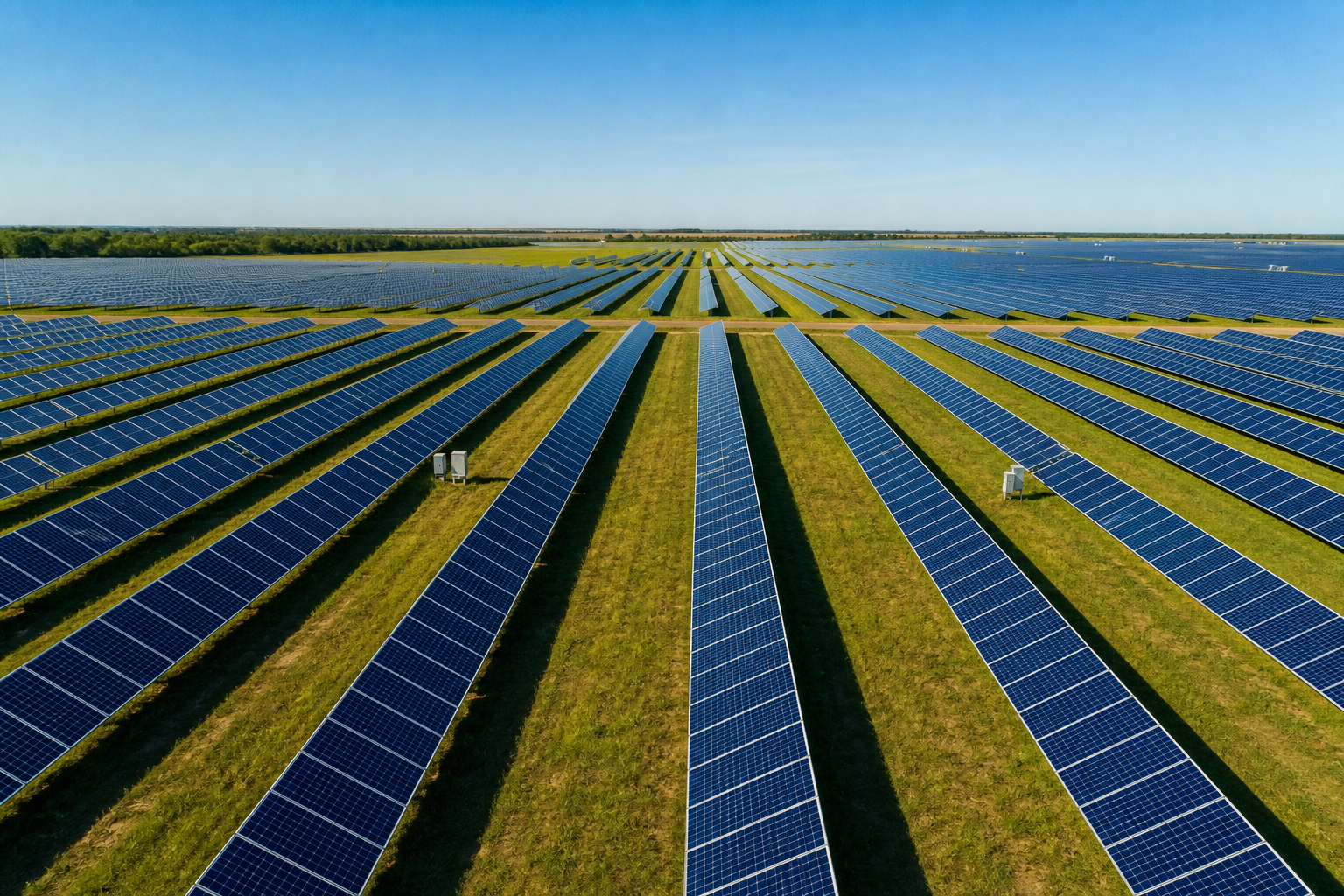
Every Detail Solar cleans commercial and utility-scale solar across Texas, where a mix of agricultural dust, seasonal pollen, and explosive utility-solar growth creates one of the country's most varied soiling environments. Texas doesn't have one soiling story - it has several depending on where your array sits, which is precisely why a measured estimate beats a generic assumption here.
Texas's soiling story: a mixed profile
- Agricultural & ranch dust. West and Central Texas farm and ranch land throws steady dust, and the drier western half sees little rinsing rain for long stretches.
- Seasonal pollen. Texas cedar (mountain juniper) blankets Central Texas in winter and grass and tree pollen spikes in spring - both settle on panels and, like NREL found with pollen elsewhere, aren't fully washed off by rain.
- Construction & energy activity. Many Texas sites sit near active construction or oilfield traffic that adds airborne particulate.
The U.S. National Renewable Energy Laboratory (NREL) puts average U.S. soiling loss around 3 to 5 percent annually; dry West Texas ag sites run higher, wetter East Texas lower. Contact us and we'll pin down which end of that range your site is on.
How we clean in Texas
For the state's booming utility-scale fleet - much of it in dry West Texas - we run robotic-plus-manual programs verified against string-level monitoring. Metro rooftops in Houston, DFW, San Antonio, and Austin get safety-first crews; ground-mount and community solar get wash-plus-vegetation scoping. All on our published pricing methodology.