
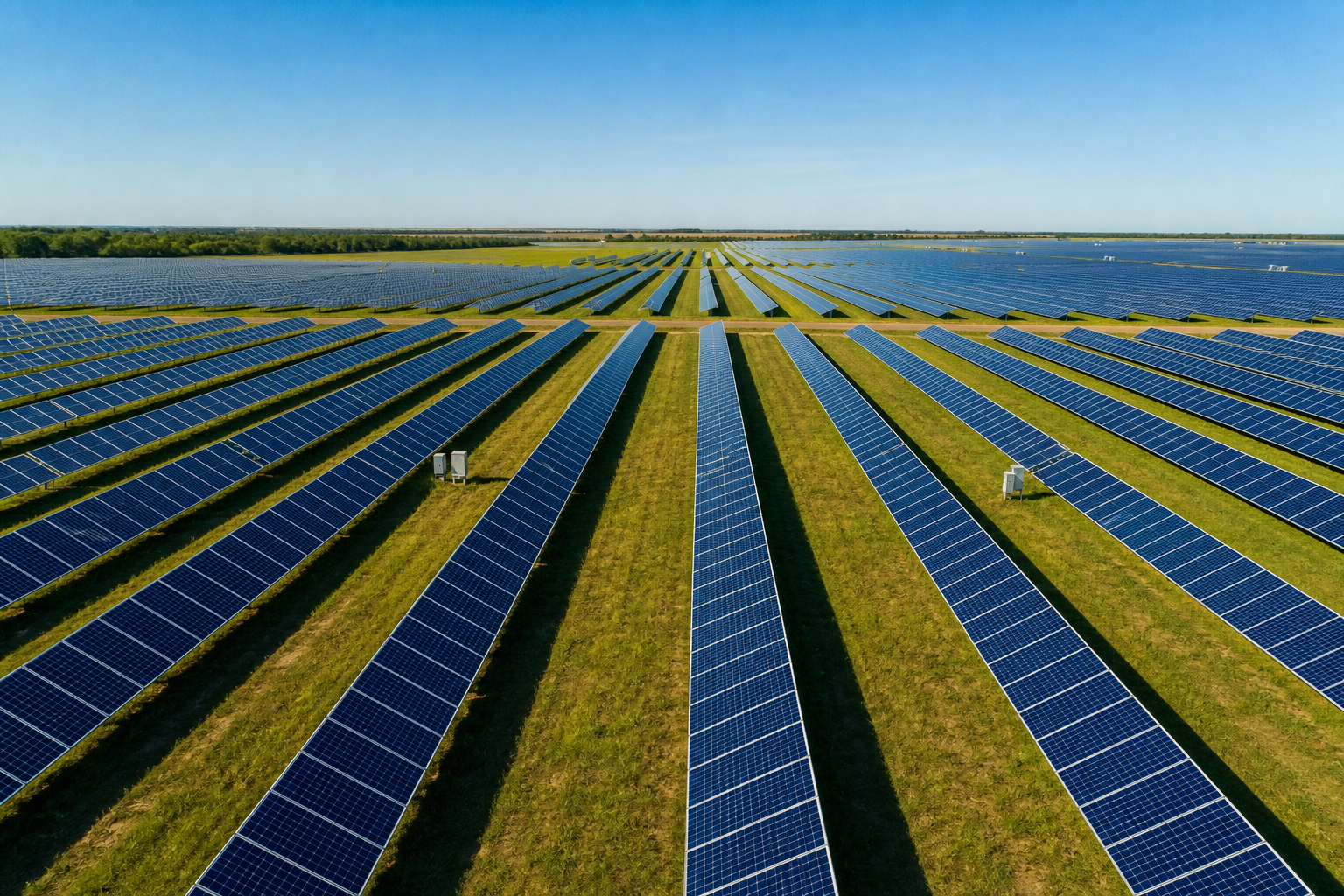
Every Detail Solar cleans commercial solar arrays across Arizona, where monsoon dust storms and a long, rainless dry season drive some of the highest soiling losses in the country. Arizona's abundant sun is only worth as much as the dust lets through - and in the desert, dust wins unless you have a cleaning program built around the monsoon cycle.
Arizona's soiling story: the desert dust cycle
Arizona soiling runs on a predictable seasonal rhythm, which is actually good news - it means you can plan around it:
- Dry season accumulation. For much of the year Arizona gets intense irradiance and almost no rain. Fine desert dust settles and stays, building loss month over month with nothing to rinse it off.
- Monsoon haboobs. Summer monsoon dust storms can coat an entire array in one event. Peer-reviewed studies have measured dust storms dropping PV output around 20 percent short-term - a post-haboob wash is often the single highest-ROI service of the year.
The U.S. National Renewable Energy Laboratory (NREL) reports average U.S. soiling loss around 3 to 5 percent annually; Arizona's dry desert sites sit well above that.
How we clean in Arizona
Desert cleaning is about water discipline and timing. We use deionized water (Arizona's hard water leaves heavy mineral spotting otherwise), schedule recurring washes through the dry season, and add event-driven washes after major haboobs. Utility-scale desert farms get robotic-plus-manual programs; rooftop and canopy arrays in Phoenix and Tucson get matched crews. All on our published pricing methodology.